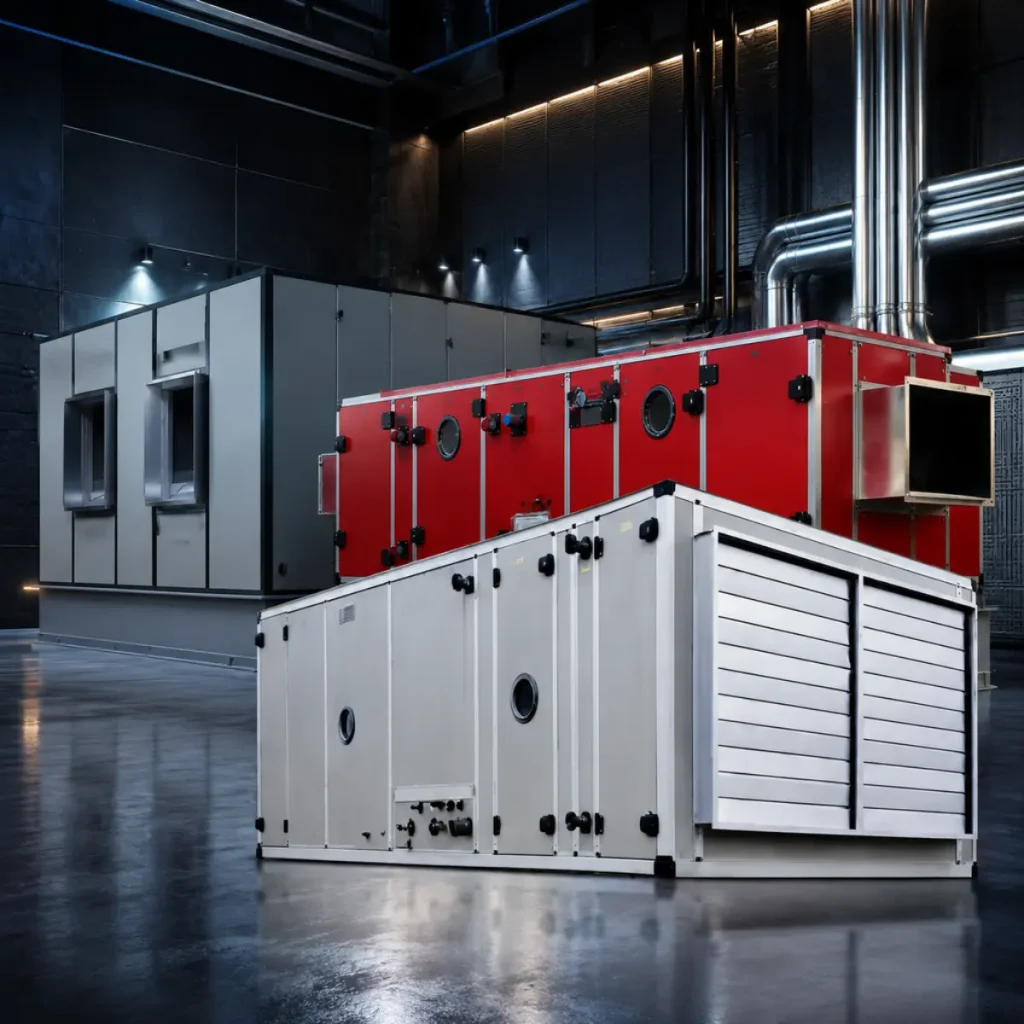
An air conditioner is a system designed to control and improve indoor air conditions in residential, commercial, and industrial environments. Depending on the system design, an air conditioner can regulate temperature and humidity, provide fresh air, filter airborne particles, and distribute conditioned air throughout different spaces.
Air conditioners play an important role in modern HVAC and air conditioning systems, particularly in buildings where maintaining comfortable and controlled indoor conditions is essential.
In many centralized systems, the air conditioner operates as a consumer or air-handling unit, receiving chilled water from a chiller for cooling and hot water or steam from a boiler for heating.
In this article, we will explore what an air conditioner is, its main components, different configurations, and how these components work together to provide conditioned air.
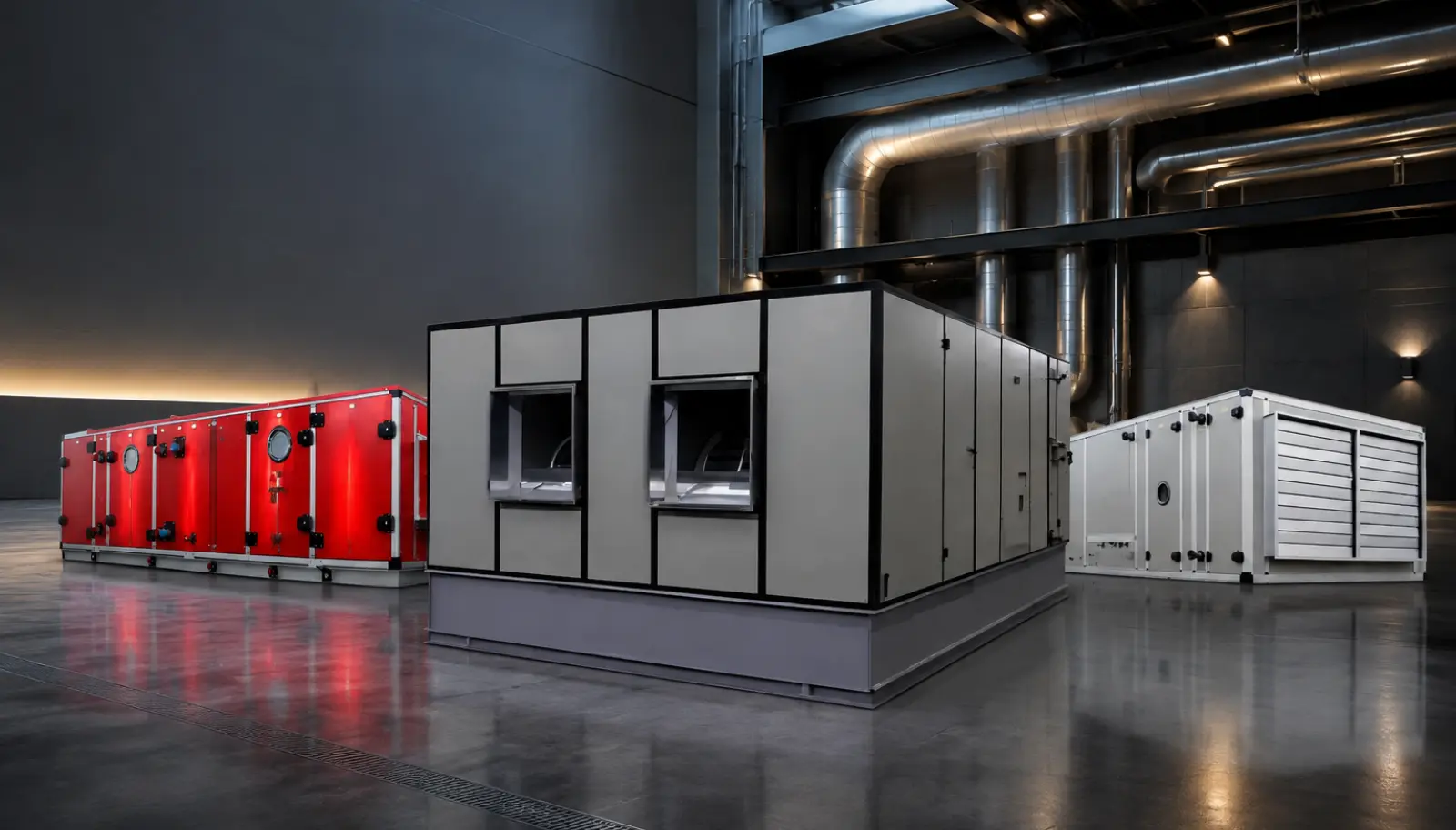
An air conditioner is a device used to condition and circulate air inside a building. Its primary function is to provide suitable indoor air conditions by controlling factors such as temperature, humidity, air circulation, and air cleanliness.
Unlike simple ventilation systems, an air conditioner can combine several processes in a single system, including:
The exact functions depend on the type and configuration of the air conditioner. For applications that require air washing, cooling, humidification, and improved air treatment, an air washer can be an effective solution for conditioning indoor air.
In centralized HVAC applications, the unit is generally connected to other equipment. For example, a chiller can supply chilled water to the cooling coil, while a hot water or steam boiler can provide the heat required for the heating coil.
The structure of an air conditioner consists of several mechanical, electrical, and control components. Each part has a specific role in preparing and distributing conditioned air.
The main components include:
The combination of these components allows the system to process air according to the requirements of the building.
The fan is one of the most important components of an air conditioner. Its main function is to create airflow and move conditioned air through the system and connected air ducts.
Depending on the design, air conditioners can use different types of fans, including:
Forward-curved fans are designed with blades that curve in the direction of rotation. They can be used in air-handling applications where the required airflow and pressure conditions are suitable.
Backward-curved fans have blades that curve opposite to the direction of rotation. They are commonly considered for applications where efficient airflow and pressure generation are required.
A plug fan is a compact fan arrangement that can be installed directly within the air-handling unit. Its design provides flexibility in equipment configuration and maintenance.
The appropriate fan type should be selected according to factors such as airflow rate, static pressure, system design, and operating conditions.
The electric motor provides the mechanical power required to operate the fan.
The motor and fan must be properly selected and matched to the required airflow and pressure. Motor performance can also influence the overall energy consumption of the air conditioner.
The casing forms the main body of the air conditioner and houses the internal components.
A properly designed structure helps protect the equipment and provides suitable access for inspection, maintenance, and cleaning.
The internal arrangement of components can vary depending on the size, capacity, and intended application of the unit.
Thermal insulation is an important part of the air conditioner structure.
Insulation helps reduce unwanted heat transfer between the conditioned air and the surrounding environment. Proper insulation can therefore help maintain system performance and reduce energy losses.
Insulation is particularly important around sections where temperature differences between the internal air and surrounding environment are significant.
Coils are responsible for transferring heat between the air and the heating or cooling medium.
The cooling coil reduces the temperature of the air passing through the air conditioner.
In centralized systems, chilled water supplied by a chiller can circulate through the cooling coil. As air passes over the coil surface, heat is transferred from the air to the chilled water, resulting in cooler supply air.
چیلر تراکمی هواخنک چیست؟ با نحوه عملکرد، اجزا، مزایا و معایب چیلر هواخنک، تفاوت آن با آبخنک و نکات مهم انتخاب و خرید آشنا شوید | فرم دما
➜ مطالعه مقاله کاملThe heating coil increases the temperature of the air.
Depending on the system design, the heating coil can use hot water or steam supplied by a boiler or another heating source.
The air passes across the heating coil and gains heat before being distributed throughout the building.
Dampers are used to control airflow within the air conditioner and connected ductwork.
They can regulate the amount of air passing through different sections of the system. In multi-zone configurations, dampers can play an important role in directing airflow through different heating and cooling paths.
This allows the system to respond more effectively to the requirements of different zones.
Flexible connections are used between the air conditioner and ductwork to help reduce the transmission of vibration and mechanical movement.
They can contribute to quieter operation and help create a more suitable connection between the air-handling unit and the duct system.
A humidifier is used when additional moisture needs to be introduced into the air.
Humidity control can be particularly important in environments where dry air may affect indoor comfort or specific operating conditions.
The need for a humidifier depends on the climate, building requirements, and desired indoor air conditions.
Controllers are responsible for monitoring and regulating the operating conditions of the air conditioner.
Depending on the system, controllers can manage parameters such as:
Modern control systems can also be integrated with building management and automation systems to provide more accurate and efficient operation.
Air conditioners can be designed in different configurations depending on the number of areas they need to serve.
A single-zone system is designed to condition one specific area or zone. It is generally simpler in terms of airflow distribution and control.
A dual-zone air conditioner is designed to serve two different zones. Airflow can be directed according to the requirements of each zone.
A multi-zone air conditioner is designed to serve several areas within a building.
In multi-zone systems, special dampers can be installed in the air outlet sections. These dampers can control airflow through different paths, allowing air to be directed toward different zones according to the operating requirements.
This configuration provides greater flexibility when different areas of a building require different heating or cooling conditions.
The operation of a multi-zone air conditioner depends on the arrangement of the dampers and heating and cooling coils.
The dampers can change between open and closed positions to control the airflow path. For example, part of the airflow can be directed through the cooling coil while another section is directed through a different path.
Depending on the required operating mode, air can pass through the appropriate heating or cooling section before entering the corresponding duct.
This arrangement makes it possible to supply heated or cooled air to different channels based on the requirements of each zone.
The system can also bypass a coil when that coil is not required, allowing air to follow another available path.
The general operation of an air conditioner can be summarized in several stages.
First, air enters the unit through the designated air inlet. Depending on the system design, fresh air can also be introduced into the airflow.
The air then passes through the required treatment sections. Filters and other components can be used to improve air quality, while heating or cooling coils adjust the air temperature.
After the air reaches the desired condition, the fan moves it through the ductwork and distributes it to the required spaces.
In a centralized system, the cooling and heating sources are generally supplied by external equipment such as a chiller and boiler.
How does an industrial air washer system actually work? See the full diagram, 4 main types, and real industrial uses — plus how to pick the right one for your facility.
➜ مطالعه مقاله کاملAn air conditioner can combine several important air-treatment functions in one system. This makes it suitable for buildings where precise control over indoor air conditions is required.
The main benefits include:
The exact performance of the system depends on proper equipment selection, correct sizing, and suitable installation.
An air conditioner can be used in a wide range of environments, including:
For standard residential, commercial, and industrial applications, a standard air conditioner can provide effective temperature control and air distribution based on the requirements of the building.
For environments that require higher levels of air cleanliness and filtration, a hygienic air conditioner can be a suitable solution. Industrial and specialized applications may require more advanced filtration, airflow control, and precise temperature or humidity management depending on the process and indoor air quality requirements.
An air conditioner and a chiller can work together, but they have different roles within a centralized HVAC system.
A chiller is primarily responsible for producing chilled water, while the air conditioner uses that chilled water through its cooling coil to cool the air.
Similarly, a boiler can provide hot water or steam for the heating coil.
Therefore, in a centralized system, the air conditioner acts as an important air-treatment and air-distribution component, while the chiller and boiler provide the required cooling and heating sources.
Selecting an appropriate air conditioner depends on the requirements of the project.
Important factors include:
For industrial or specialized applications, the required filtration system and control equipment should also be carefully considered.
Form Dama provides air-conditioning and HVAC equipment designed for different residential, commercial, and industrial applications.
Choosing the right air conditioner requires careful consideration of the building conditions, required capacity, airflow, heating and cooling requirements, and system configuration.
If you are looking for an air conditioner or need professional guidance regarding equipment selection and system design, you can contact Form Dama’s experts for consultation and further information.
An air conditioner is a device used to condition and circulate indoor air by controlling factors such as temperature, humidity, air quality, and airflow.
The main components include the fan, electric motor, structure and casing, insulation, heating and cooling coils, dampers, flexible connections, humidifier, and control system.
Yes. Depending on the system design, an air conditioner can provide both heating and cooling through heating and cooling coils.
A chiller produces chilled water, while an air conditioner uses chilled water through its cooling coil to cool and distribute air throughout the building.
Based on the provided system configuration, air conditioners can use forward-curved, backward-curved, and plug fans.
A multi-zone air conditioner is designed to serve several areas and uses dampers and different airflow paths to distribute conditioned air according to the requirements of each zone.