


Description
Form Dama Split Duct System | High-Performance Ducted HVAC Solution
Form Dama Split Duct: Efficient Cooling and Heating for Modern Buildings
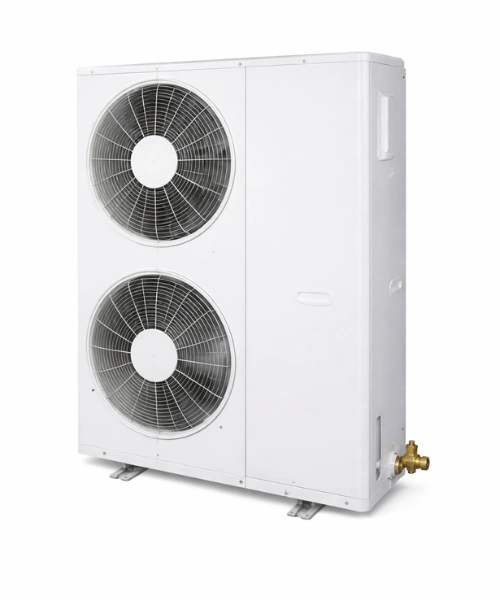
The Form Dama Split Duct System is a ducted HVAC solution designed to provide cooling and heating for residential, commercial, and office buildings. Featuring a concealed indoor unit, centrifugal fan technology, washable aluminum filters, and insulated internal components, this system supports efficient air distribution while maintaining a clean and unobtrusive interior appearance.
Designed for installation above suspended ceilings, split duct systems distribute conditioned air through a network of ducts to multiple rooms or indoor spaces. This configuration makes them a practical choice for projects requiring centralized air distribution without installing a separate wall-mounted indoor unit in every room.
Form Dama split duct units are available in capacities ranging from 18,000 to 60,000 BTU/h, providing options for different building sizes and thermal loads. Depending on the selected configuration, the system can accommodate two-row or three-row coils and may support hot-water heating coils for applications requiring an alternative heating arrangement.
Selecting the appropriate unit requires consideration of the building’s cooling and heating loads, required airflow, external static pressure, duct layout, and installation conditions.
What Is a Split Duct System?
A split duct system is an air-conditioning system consisting of an indoor unit and an outdoor unit connected through refrigerant piping and associated electrical and control connections.
Unlike conventional wall-mounted split air conditioners, the indoor unit is installed out of sight, typically within a suspended ceiling or designated mechanical space. Conditioned air passes through supply ducts and outlets to reach the rooms served by the system.
The return-air path allows indoor air to circulate back to the unit, where it passes through the filter and heat-exchange coil before being supplied again.
This configuration provides several practical advantages:
- Concealed indoor equipment for a clean architectural appearance.
- Ducted air distribution to multiple connected spaces.
- Flexible placement of supply and return-air grilles.
- Compatibility with appropriately designed cooling and heating arrangements.
- Centralized access to the primary indoor air-conditioning equipment.
The number of rooms served and the degree of temperature control available depend on the system design, duct configuration, zoning arrangements, and selected controls.
How Does the Form Dama Split Duct System Work?
The operating principle depends on the selected cooling and heating configuration.
Cooling Operation
During cooling operation, the refrigeration cycle transfers heat from indoor air to the outdoor environment.
The indoor fan draws return air through the filter and across the evaporator coil. The refrigerant absorbs heat from the air, reducing its temperature before the fan delivers the conditioned air through the duct network.
The outdoor unit releases the absorbed heat to the ambient environment. Proper refrigerant charge, airflow, coil cleanliness, and operating conditions are essential for reliable performance.
Heating Operation
Heating can be provided through different arrangements, depending on the selected system.
In a reversible heat-pump configuration, the refrigeration cycle operates in reverse to transfer heat from the outdoor environment to the indoor space.
Alternatively, a hot-water heating coil can be installed in the indoor unit where the system is designed for this arrangement. Hot water passes through the coil, transferring thermal energy to the air flowing across its surface.
When a hot-water coil is used for heating, the heat source may be a boiler or another compatible hot-water system. This arrangement can reduce reliance on the outdoor compressor for space heating, although the overall energy efficiency depends on the heat source, pump consumption, fan power, and system design.
The heating method should therefore be confirmed against the technical specifications of the selected Form Dama model.
Technical Specifications of Form Dama Split Duct Systems
Technical note: The available information does not specify model-by-model airflow rates, external static pressure values, electrical input, refrigerant type, noise levels, or certified efficiency ratings. These parameters should be verified using the manufacturer’s technical documentation before final equipment selection.
Key Features of Form Dama Split Duct Systems
1. Capacity Range for Different Applications
Form Dama split duct systems are available in capacities from 18,000 to 60,000 BTU/h.
This range provides options for projects with different cooling and heating requirements. However, the appropriate capacity should be determined through a thermal load calculation rather than floor area alone.
Factors such as occupancy, glazing, solar exposure, insulation, ceiling height, ventilation requirements, and outdoor design temperatures can significantly influence the required capacity.
2. Concealed Indoor Unit for Architectural Flexibility
The indoor unit is installed above the suspended ceiling or in a suitable concealed mechanical space.
Only the supply and return-air grilles need to remain visible in the occupied area. This arrangement can help maintain a consistent interior design in apartments, offices, retail environments, and commercial buildings.
The installation must provide sufficient clearance for duct connections, condensate drainage, filter access, and future maintenance.
3. Centrifugal Fan for Ducted Air Distribution
Form Dama split duct units use centrifugal fans designed to deliver airflow against the resistance of the duct system.
The fan must provide the airflow required by the conditioned space while overcoming pressure losses caused by ducts, bends, filters, grilles, dampers, and other components.
Correct external static pressure selection is essential. A unit with insufficient available pressure may not deliver the required airflow, while an unsuitable duct design can increase noise and energy consumption.
4. Washable Aluminum Air Filters
Washable aluminum filters are installed in the incoming air path to capture a portion of airborne dust and particulate matter.
Regular filter cleaning helps maintain airflow and reduces the accumulation of contaminants on downstream components.
These filters should not be considered equivalent to high-efficiency particulate filters. If a project requires a specific indoor air quality classification or fine-particle filtration level, additional filtration equipment may be necessary.
5. Two-Row and Three-Row Coil Options
The system supports two-row and three-row coil configurations, subject to the selected model and installation requirements.
Coil geometry affects heat-transfer surface area, airflow resistance, water-side or refrigerant-side performance, and the overall operating characteristics of the unit.
The correct coil configuration should be selected according to the required thermal duty, available space, airflow, and manufacturer-approved performance data.
6. Insulated Indoor Unit
The indoor unit is fully insulated to help limit unwanted heat transfer and reduce the risk of surface condensation under suitable installation conditions.
Insulation performance depends on the insulation material, thickness, continuity, ambient humidity, and operating temperatures.
Proper sealing of joints, appropriate vapor control, and correctly designed condensate drainage remain essential for preventing moisture-related problems in concealed installations.
7. Inverter Options for Energy Management
Selected configurations may offer inverter technology, allowing the compressor to adjust its operating speed according to cooling or heating demand.
Unlike fixed-speed operation, variable-speed control can reduce frequent compressor starts and stops when the system operates within its modulation range.
Actual energy savings depend on the selected model, part-load performance, control settings, installation quality, building load, and operating schedule. Inverter technology should not be assumed to be available across every model without confirmation.
Applications of Form Dama Split Duct Systems
Form Dama split duct systems can be considered for a range of building applications, subject to engineering assessment and model suitability.
Residential Buildings
Suitable applications may include apartments, private residences, and multi-room homes where concealed equipment and ducted air distribution are preferred.
Office Buildings
Ducted systems can supply conditioned air to offices, meeting rooms, reception areas, and other connected indoor spaces. Appropriate zoning and airflow balancing are important when rooms have different occupancy patterns or thermal loads.
Commercial Properties
Retail units, showrooms, and commercial interiors may benefit from concealed equipment and flexible grille placement.
Multi-Room Indoor Environments
A single indoor unit can distribute conditioned air to several connected rooms through a properly designed duct network. The system’s ability to maintain different temperatures in individual rooms depends on the available zoning and control arrangements.
Advantages of Choosing Form Dama Split Duct
The main advantages of this product range include:
- Capacity options from 18,000 to 60,000 BTU/h.
- Concealed indoor installation for a streamlined interior appearance.
- Ducted air distribution across multiple connected spaces.
- Centrifugal fan technology for ducted airflow.
- Washable aluminum air filters.
- Support for two-row and three-row coil configurations.
- Fully insulated indoor unit.
- Optional inverter technology where specified.
- Potential compatibility with hot-water heating coils.
- Flexible integration into residential and commercial HVAC designs.
The actual performance and operating cost depend on the selected model, installation quality, thermal load, duct design, and control strategy.
Split Duct vs. Wall-Mounted Split Air Conditioner
The principal difference between a split duct system and a conventional wall-mounted split air conditioner is the method of installation and air distribution.
A split duct system may be preferable when concealed equipment and centralized ducted distribution are priorities. Wall-mounted systems may be more practical when independent room control, simpler installation, or limited ceiling space is important.
How to Select the Right Split Duct Capacity
Choosing the correct capacity is essential for comfort, reliability, and energy efficiency.
1. Calculate the Building’s Thermal Load
The cooling and heating requirements should be calculated using the building’s dimensions, insulation, glazing, occupancy, ventilation, equipment loads, and local design weather conditions.
Floor area alone is not sufficient for accurate equipment selection.
2. Determine the Required Airflow
The indoor unit must provide enough airflow to meet the room’s thermal load and distribute air effectively through the supply grilles.
Airflow requirements depend on the cooling or heating load, supply-air conditions, room layout, and acceptable air velocity.
3. Calculate External Static Pressure
External static pressure represents the resistance imposed by the ductwork and associated air-distribution components.
The design calculation should account for straight duct sections, fittings, filters, grilles, dampers, and other relevant components. The selected unit must deliver the required airflow at the calculated external static pressure.
4. Check Ceiling Space and Service Access
The concealed indoor unit requires adequate space for the equipment, supply and return ducts, refrigerant piping, condensate drainage, and maintenance access.
Service openings should be positioned so that technicians can inspect and maintain the filter, fan, coil, and electrical components.
5. Design the Return-Air Path
The return-air arrangement should provide sufficient airflow without excessive noise or pressure loss.
Poorly positioned return grilles can reduce air circulation and create temperature differences between rooms.
6. Evaluate Zoning Requirements
If different rooms require independent temperature settings, the project may need suitable dampers, thermostats, zoning controls, or separate indoor units.
A conventional ducted system should not be assumed to provide independent temperature control for every room.
7. Verify Electrical and Heating Requirements
Confirm the electrical supply, motor specifications, control compatibility, and heating arrangement for the selected model.
If a hot-water coil is required, the available water temperature, flow rate, heat source, and hydraulic design must also be evaluated.
Installation and Maintenance Recommendations
Correct installation and preventive maintenance are necessary for reliable operation.
Recommended installation checks:
- Confirm the unit’s mounting arrangement and service clearances.
- Verify duct dimensions and external static pressure requirements.
- Seal duct joints appropriately to limit air leakage.
- Provide correctly sized and sloped condensate drainage.
- Insulate components and piping where required to control condensation.
- Check the refrigerant piping and connections according to the manufacturer’s instructions.
- Balance airflow through the supply and return grilles.
- Verify electrical connections, controls, and operating modes.
Recommended maintenance activities:
- Clean the washable aluminum filter at suitable intervals.
- Inspect the indoor coil for dust accumulation and obstruction.
- Check the centrifugal fan, motor, and associated components.
- Inspect condensate drainage for blockage or leakage.
- Examine ductwork and connections for air leakage.
- Check control settings and operating performance.
- Inspect refrigerant-system components where applicable.
- Maintain hot-water coils and associated hydraulic components when installed.
Maintenance frequency should be adjusted according to operating hours, indoor dust levels, environmental conditions, and the manufacturer’s recommendations.
Frequently Asked Questions About Form Dama Split Duct Systems
1. What is the capacity range of Form Dama split duct systems?
Form Dama split duct systems are available in capacities ranging from 18,000 to 60,000 BTU/h. The appropriate model depends on the calculated building load, required airflow, duct resistance, and operating conditions.
2. Can a split duct system cool multiple rooms?
Yes. A single indoor unit can distribute conditioned air to multiple connected rooms through a properly designed duct network.
However, the number of rooms served depends on the available capacity, airflow distribution, duct design, and control arrangement. Independent room temperature control requires an appropriate zoning solution.
3. Can Form Dama split duct systems provide heating as well as cooling?
Yes, the system can be configured for cooling and heating, depending on the selected model and heating arrangement.
Heating may be provided through a reversible refrigeration cycle or a compatible hot-water coil. The exact configuration should be confirmed before purchase.
4. What is the purpose of a hot-water coil in a split duct system?
A hot-water coil transfers heat from circulating hot water to the air passing through the indoor unit.
It can provide space heating when connected to a suitable hot-water source. Its heating output depends on water temperature, water flow rate, coil design, and airflow.
5. What is the difference between a two-row and a three-row coil?
The terms refer to the arrangement of heat-exchange tubes within the coil.
A three-row coil generally provides more tube rows and potentially greater heat-transfer surface area than a comparable two-row coil. However, the actual thermal capacity and pressure drop depend on the complete coil geometry, fin design, fluid conditions, and airflow.
The correct configuration must be selected using the manufacturer’s performance data rather than row count alone.
6. What is external static pressure, and why is it important?
External static pressure is the resistance that the fan must overcome to move air through the external duct system and associated components.
Incorrect pressure selection can lead to insufficient airflow, excessive noise, reduced thermal performance, or increased fan energy consumption.
The required pressure should be calculated from the designed duct network and matched to the manufacturer’s fan performance data.
7. Are the aluminum filters washable?
Yes. The specified units use washable aluminum filters.
The filters should be cleaned according to the manufacturer’s instructions and allowed to dry appropriately before reinstallation. Damaged filters should be replaced to prevent debris from reaching downstream components.
8. Does an inverter split duct system consume less electricity?
An inverter system can reduce electricity consumption under suitable operating conditions by adjusting compressor speed to match demand.
However, the actual energy consumption depends on the equipment’s efficiency, thermal load, control settings, installation quality, and operating conditions. Savings should be evaluated using verified model-specific performance data.
9. Does a split duct system require a suspended ceiling?
A concealed indoor unit generally requires a suitable ceiling void or another designated mechanical space.
The required clearance depends on the unit dimensions, duct connections, drainage arrangement, piping, and maintenance access. These requirements should be reviewed before finalizing the architectural design.
10. Can a split duct system improve indoor air quality?
A split duct system can circulate indoor air through its filtration system and may support ventilation when designed with an appropriate outdoor-air supply.
However, a washable aluminum filter primarily captures a portion of airborne particles and does not, by itself, guarantee high-efficiency filtration or adequate fresh-air ventilation.
Indoor air quality depends on filtration efficiency, outdoor-air provision, humidity management, maintenance, and the building’s overall ventilation strategy.
11. Why is proper duct design important?
Duct design determines how effectively conditioned air reaches the intended spaces.
Incorrect duct sizing, excessive bends, leakage, or poorly balanced outlets can cause airflow problems, uneven temperatures, increased noise, and unnecessary energy consumption.
A properly engineered duct system should be matched to the indoor unit’s airflow and available external static pressure.
12. How much does a Form Dama split duct system cost?
The price depends on the selected capacity, model configuration, inverter availability, coil arrangement, and other technical requirements.
Installation costs may also vary according to ductwork, piping, electrical work, drainage, and site conditions. An accurate quotation requires confirmation of the required model and project specifications.
13. What information is needed to select a suitable split duct model?
The main requirements include:
- Building area, ceiling height, and room layout.
- Cooling and heating load calculations.
- Local outdoor design temperatures.
- Required airflow and external static pressure.
- Duct layout and available installation space.
- Required heating configuration.
- Electrical supply and control requirements.
- Zoning and room-temperature control expectations.
These details help determine the most appropriate capacity and configuration for the project.
Form Dama Split Duct: A Practical HVAC Solution for Modern Buildings
The Form Dama Split Duct System provides a concealed, ducted approach to heating and cooling for residential, office, and commercial environments.
With capacities ranging from 18,000 to 60,000 BTU/h, centrifugal fan technology, washable aluminum filters, insulated indoor units, and support for two-row and three-row coil configurations, the product range offers flexibility for different building HVAC requirements.
Successful implementation depends on correct thermal load calculations, appropriate fan pressure selection, properly designed ductwork, suitable heating configuration, and accessible maintenance arrangements.
For technical information and assistance with selecting a Form Dama split duct system, consult the manufacturer’s team with your project requirements, design temperatures, airflow needs, and installation details.


Reviews
There are no reviews yet.