

Description
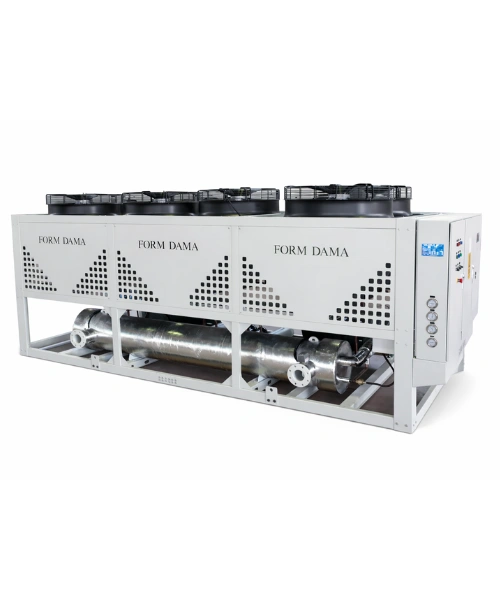
Air-Cooled Compression Chillers – High-Efficiency Cooling Solutions by Form Dama
Form Dama manufactures air-cooled compression chillers in various types, including screw, scroll, and reciprocating (piston) compressors, providing reliable cooling for residential, commercial, and industrial applications. Designed for high efficiency and optimal energy consumption, these chillers meet a wide range of cooling requirements.
Types of Air-Cooled Compression Chillers
-
Screw Chillers
-
Capacity range: 50–1,200 tons
-
Ideal for gradual load operation, optimizing electricity usage and reducing mechanical wear
-
Suitable for residential, commercial, and industrial HVAC systems
-
-
Scroll Chillers
-
Capacity range: 5–100 tons
-
Designed for industrial processes, commercial buildings, and fluid cooling applications
-
-
Reciprocating (Piston) Chillers
-
Capacity range: 5–480 tons
-
Durable and high-performing for various HVAC and industrial needs
-
Condenser Options
Air-cooled compression chillers can be equipped with:
-
Air-cooled condensers: Suitable for a wide range of HVAC and industrial applications with low maintenance costs
-
Water-cooled condensers: Selected based on environmental conditions and operational requirements
Form Dama chillers are engineered for maximum efficiency, with evaporators and condensers designed using HTFS software, ensuring optimal performance from each compressor.
Key Features
-
Nominal cooling capacities: 5–1,200 tons
-
Compressor types: Screw, scroll, and reciprocating
-
Capacity control for enhanced energy efficiency
-
High-quality compressors from global brands: Bitzer, Copeland, Danfoss, and Carrier
-
PLC-controlled electrical panels for precise operation
-
HTFS-optimized evaporator and condenser design
-
Low maintenance and long operational lifespan
-
Robust steel chassis for durability and stability
-
Compatible with refrigerants: R134, R-22, R-407C
How an Air-Cooled Compression Chiller Works
An air-cooled compression chiller operates on a vapor compression cycle:
-
Compressor: Compresses refrigerant gas to increase pressure and temperature.
-
Discharge line: Transfers high-pressure, hot refrigerant gas to the condenser.
-
Condenser: Releases heat to ambient air, converting refrigerant from gas to liquid.
-
Expansion valve (or capillary tube): Regulates refrigerant flow to the evaporator.
-
Evaporator: Absorbs heat from water or air, providing cooling.
-
Suction line: Returns low-pressure refrigerant gas to the compressor, completing the cycle.
This efficient cycle ensures reliable cooling for HVAC systems, industrial processes, and large-scale applications.
Applications
-
Air conditioning and industrial ventilation
-
Chemical and pharmaceutical industries
-
Food storage and refrigeration
-
Large residential and commercial buildings
Advantages Over Absorption Chillers
-
Higher COP (Coefficient of Performance): 1–8 for compression chillers vs. 0.5–1.2 for absorption chillers
-
Compact size and lighter weight: Easier installation and maintenance
-
Simpler installation: Fully assembled chillers can be placed directly in rooftops or mechanical rooms
-
Cost-effective: Significantly lower purchase cost compared to absorption chillers
Important Considerations When Buying
-
Check dimensions and weight for transport and installation
-
Ensure adequate space in the mechanical room for installation and annual maintenance
-
Select a reliable brand with warranty to guarantee long-term performance
Form Dama air-cooled compression chillers provide energy-efficient, high-performance, and reliable cooling solutions suitable for any residential, commercial, or industrial application.


Reviews
There are no reviews yet.