

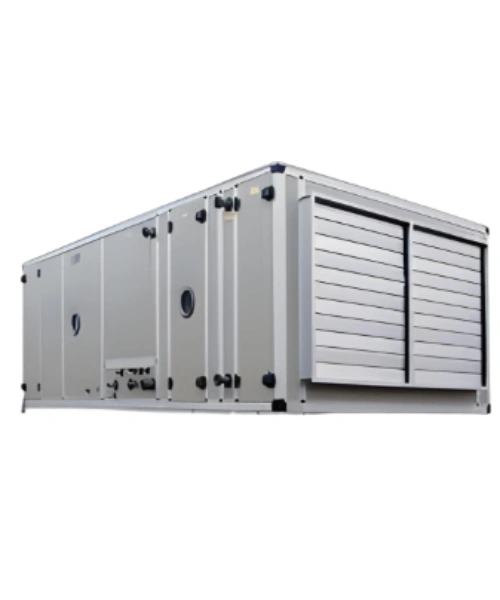
Description
Standard Air Conditioner (Air Handling Unit – AHU)
A Standard air conditioner, also known as an Air Handling Unit (AHU), is a professional HVAC system designed to control and circulate air in residential, commercial, and industrial environments. This system plays a key role in maintaining indoor comfort by regulating temperature, humidity, air filtration, and fresh air supply throughout the year.
By adjusting cooling and heating processes, a Standard air conditioner provides efficient summer and winter air conditioning, ensuring a clean and healthy indoor atmosphere. These systems are classified as air consumption units and typically require a chiller for chilled water and a hot water boiler or steam boiler for heating operation.
Types of Standard Air Conditioner Systems
Standard air conditioner units are manufactured in single-zone, dual-zone, and multi-zone configurations.
Multi-Zone Standard Air Conditioner
In multi-zone systems, dual-function dampers are installed at the air outlets. These dampers operate in an open-and-close mechanism, allowing precise control of airflow. By adjusting the dampers, air can be directed over either cooling or heating coils, enabling:
-
Independent temperature control for different zones
-
Air bypassing when one coil is inactive
-
Energy-efficient airflow distribution to multiple ducts
Technical Specifications and Features
-
12 AHU models with airflow capacities from 2,000 CFM to 80,000 CFM
-
12 Air Washer models with identical airflow ranges
-
Galvanized steel structure with aluminum profiles and high mechanical strength
-
Double-wall galvanized body with durable and attractive coating
-
Modular design with easy assembly and disassembly for transportation limitations
-
Centrifugal fan with static and dynamic balancing, low noise level, and plastic vibration isolators
-
Available in horizontal and vertical configurations
-
Copper tubes with copper or aluminum fins, customizable per customer requirements
Components of a Standard Air Conditioner
A Standard air conditioner is engineered to produce clean, conditioned air for both cooling and heating purposes. The system consists of:
-
Blower fan
-
Cooling and heating coils
-
Air filters
-
Mixing chamber
-
Control equipment
-
Sound attenuator
-
Vibration isolator
-
Dampers
-
Humidifier (final stage)
This integrated design ensures high air quality and thermal comfort in demanding environments.
Applications of Standard Air Conditioner Systems
Standard air conditioners are widely used for temperature and humidity control in large facilities, including:
-
Industrial halls and factories
-
Commercial complexes
-
Hospitals and healthcare centers
-
Office buildings and public institutions
In humid regions, using a Standard air conditioner is strongly recommended instead of fan coil units, as AHUs provide superior humidity control and fresh air management.
Types of Air Handling Units
1. Standard Air Conditioner (Conventional AHU)
The most basic and widely used type, suitable for industrial and commercial buildings.
-
4-row cooling coil
-
2-row heating coil
-
Centrifugal fan
2. Full Fresh Air AHU
Designed for environments where fresh air supply is critical.
-
No return air damper
-
6-row cooling coil
-
2–3 row heating coil
-
Commonly used in hospitals with aluminum and bag filters
3. Hygienic Air Handling Unit
Ideal for clean rooms and operating theaters.
-
Equipped with HEPA and ULPA filters
-
Stainless steel body
-
Plug fan (Blower fan)
-
High hygiene and contamination control standards
Temperature Control Methods in Standard Air Conditioner Systems
Method 1: Water Flow Control
Temperature is regulated by controlling chilled or hot water flow through coils using motorized or electric three-way valves, combined with duct-mounted thermostats.
Method 2: Fan Speed and Thermostat Control
A room or corridor thermostat controls fan speed and on/off operation. The AHU control system integrates:
-
Duct thermostat
-
Three-way valve
-
Fan speed controller
Method 3: Fresh Air Damper Control
Damper motors regulate fresh air intake and system capacity. By installing a flow switch on the evaporator outlet, the chiller can be stopped automatically when the circulation pump shuts down.
Key Factors When Purchasing a Standard Air Conditioner
Before selecting a Standard air conditioner, consider the following:
-
Installation location
-
Required cooling and heating capacity
-
Horizontal or vertical configuration
-
Supply and return airflow volume
-
Air discharge direction
-
Unit dimensions
-
Coil specifications (rows, diameter, material, heat transfer area)
-
Pressure drop and type of heating/cooling fluid
-
Number of fins and heat exchange efficiency
-
Type and number of air filtration stages
What Is an Industrial Standard Air Conditioner?
An industrial Standard air conditioner is designed for:
-
Industrial warehouses
-
Production halls
-
Sports complexes
-
Large-scale facilities
Due to the vast space, airflow circulation requirements are higher. Specialized filters are used to optimize energy consumption, improve air circulation, and prevent industrial pollutants from entering the system.
Installation Guidelines for Standard Air Conditioner Units
For large industrial AHUs, the unit is typically disassembled before transportation and reassembled at the installation site.
-
Available in horizontal and vertical designs
-
Single-zone systems provide uniform air conditions
-
Multi-zone systems allow different temperature and humidity levels using dampers
-
Foundation design depends on unit weight and structural load
-
Drainage (floor drain) must be considered for maintenance and cleaning
-
A clearance of 1.5 times the unit width should be allowed for potential coil replacement
Professional Consultation and Purchasing
For optimal performance and long-term reliability, it is recommended to consult HVAC specialists before purchasing a Standard air conditioner. Choosing the right model and brand at a competitive price will significantly improve indoor air quality, energy efficiency, and operational performance.


Reviews
There are no reviews yet.